Schooling in Phuket: A Guide for Expat Families
LKG Team

Why the school decision comes first
Most families assume they'll pick a neighbourhood, then find a school nearby. In Phuket, it tends to work the other way around. The island's best-regarded schools are spread across different areas, school buses have fixed routes, and popular schools run waitlists; so, families who lock in a school first, then rent close to it, generally have a smoother settling-in period than those who commit to a villa and hope a place opens up nearby.
Phuket now has around 15–20 international schools, but only a handful are the ones expat families consistently return to. Annual tuition spans a wide range, roughly 150,000 THB at the affordable end up to 900,000+ THB at the premium end, so it pays to know what you're comparing before you fall in love with a campus.
The main school’s expat families consider
Here's an honest rundown of the schools that come up again and again in parent conversations, forums, and Facebook groups.
British International School Phuket (BISP): Koh Kaew
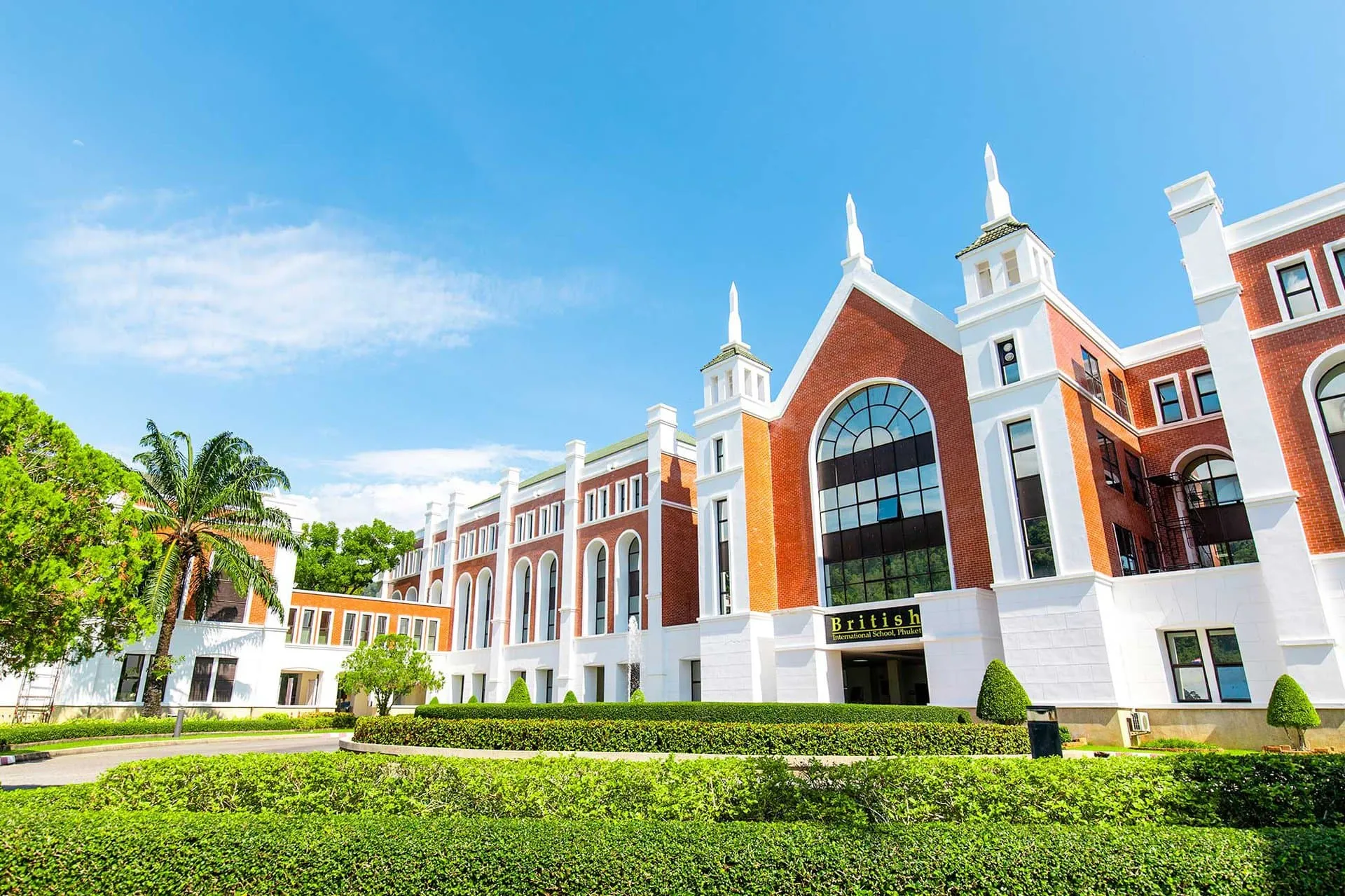
Founded in 1996, BISP is the island's largest and most established international school, set on a 44-acre campus with around 1,140 students from over 56 nationalities. It follows the British National Curriculum through to IGCSEs, BTEC and the IB Diploma, and has strong sports, arts and music programmes. Fees run from roughly 300,000 to 900,000+ THB a year depending on year group. It's the most popular choice for families relocating from the UK or wanting a familiar, structured curriculum, and tends to suit families based around Koh Kaew, Kathu or the east side of the island.
UWC Thailand: Thalang
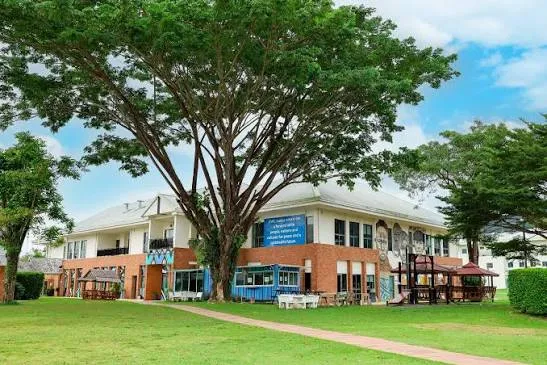
The only full IB Continuum school on the island and one of just 18 United World Colleges globally. Around 500 students from 60+ nationalities, with a strong emphasis on sustainability, service and intercultural exchange. Boarding is available. Fees range from roughly 497,000 to 876,000 THB a year, though scholarships can bring this down meaningfully. UWC suits academically ambitious families and those who want their children immersed in a genuinely international, mission-driven community. It's based in Thalang, close to Cherngtalay and Laguna.
HeadStart International School: Cherngtalay & Vichit (near Chalong/Phuket Town)

Founded in 2005 and now over 1,500 students across two campuses, the Chaofah City Campus in Vichit (close to Chalong and Phuket Town) and a Cherngtalay campus in the north-west, HeadStart offers the British curriculum at a more accessible price point than BISP or UWC. A strong choice for families who want a quality international education without the premium fees. It's particularly well regarded for early years and primary.
QSI International School of Phuket: Kathu

Follows a US-based framework and is part of the global QSI network. Annual fees are roughly 400,000–600,000 THB. A natural pick for American families or those planning on their children eventually applying to US universities, and central for families based in Kathu.
Kajonkiet International School (KIS): Kathu
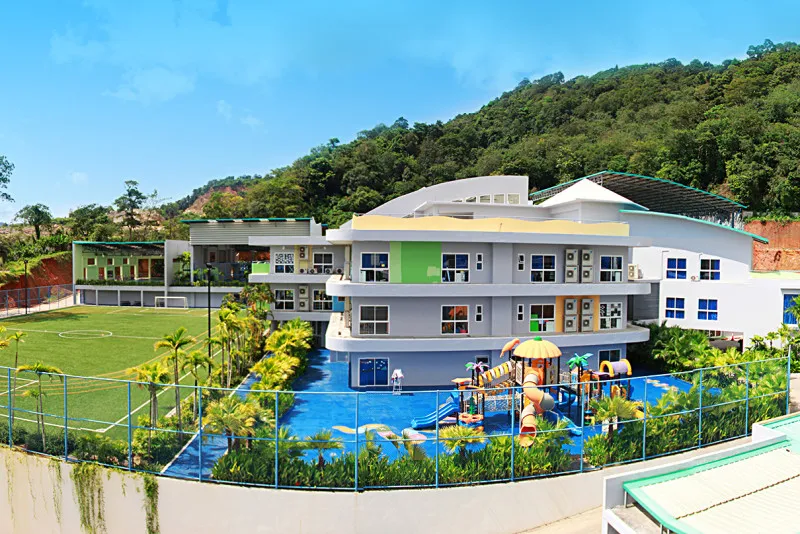
Set in the Kathu valley on 15 rai, KIS follows the full British curriculum from EYFS through IGCSE and A-Levels, taught in English, with Thai, Chinese and Japanese offered as additional languages. Founded around 2011. Fees vary a lot by year group and published figures differ between sources, ranging from roughly 75,000 THB in the early years to around 350,000–400,000 THB in the senior years, so ask the school for its current schedule. That puts the upper years in a similar range to HeadStart or QSI rather than at the budget end.
KIS is part of the wider Kajonkiet Group, Phuket's largest private education provider, but it is the only school in that group offering a full international curriculum. Sister schools such as Kajonkietsuksa, Kajonkiet Thalang and Kajonkiet Cherngtalay are separate Thai-curriculum schools with English Programme tracks, not the same school as KIS.
Finnway International School: Thalang
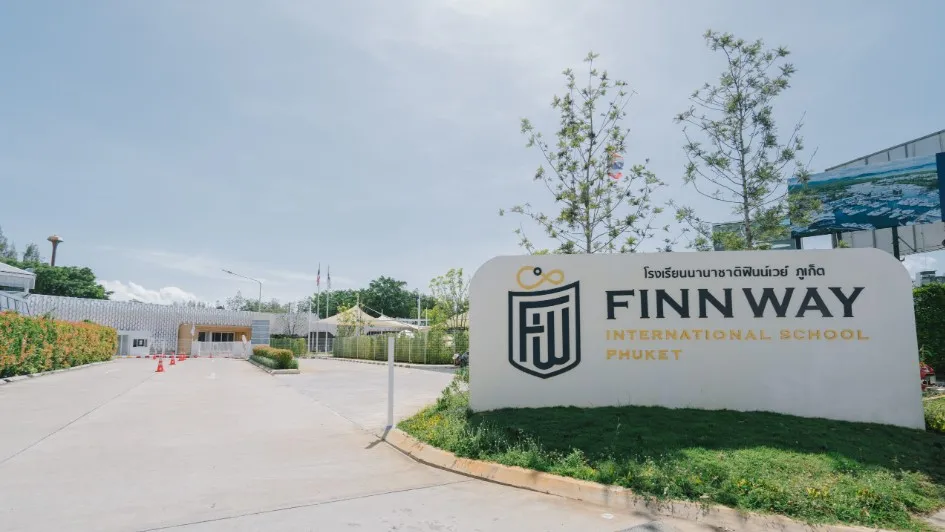
A rarer find in Thailand: a school built around the Finnish education model, which leans less exam-driven and more collaborative and play-based than the British or American systems. Finnway pairs academic rigour with a strong emphasis on wellbeing and hands-on, personalised learning; Finland is consistently ranked among the world's top education systems, and the school leans into that reputation. It suits families drawn to a gentler, less test-heavy approach, particularly for younger children, and is based in Thalang, convenient for families around Cherngtalay and Laguna.
Celestia Andaman International School (CAIS)

CAIS is a newly opened British curriculum school in Thalang, and it now holds its Ministry of Education international school licence. For now it is an early years and lower primary school: it currently runs from Pre-Nursery, Nursery and Reception (EYFS) up to Years 1 and 2 (Key Stage 1), for children aged 2 to 7. The approach is inquiry-based, play-based and child-centred, built around three pillars: academic foundations, outdoor and active learning, and mindfulness and wellbeing. Learning is meant to spill well beyond the classroom, with excursions and hands-on experiences from the very first weeks.
The school is led by Dr Phatcharaphorn (Yui) Phermkaaew, known to families as Kru Yui. She holds a PhD in Educational Administration and two Master's degrees (in Educational Administration and in Business Administration), and has worked at three of Phuket's established international schools (HeadStart, BISP and UWC Thailand), in both academic and non-academic roles. Her approach is collaborative and community-minded: working closely with staff, students and parents so that the whole school community keeps learning and growing together, which fits CAIS's emphasis on belonging and strong relationships between children, teachers and families. For parents weighing up a brand new school, a head with serious academic credentials and hands-on experience across several of the island's best-known schools is a genuine reassurance.
Because CAIS currently stops at Year 2, it suits families with younger children right now. If you are looking for a long-term school, ask how and when it plans to add year groups, and arrange a campus visit and a chat with current parents before committing.
Glenalmond Phuket International School: Thanyapura, north Phuket
Opening in August 2026, this is the first overseas campus to carry the Glenalmond name, in partnership with Glenalmond College and Craigclowan School & Nursery in Perthshire, Scotland. It launches with Early Years (EYFS) and Primary (National Curriculum for England), with Key Stage 3 likely to follow depending on demand, building towards IGCSEs, A Levels and BTEC over time. It's based inside the Thanyapura Sports & Health Resort, giving students access to excellent sports and wellness facilities, and teaches Singapore Maths from Year 1 alongside compulsory Mandarin. Published 2026/27 fees range from roughly 270,000 to 950,000 THB, plus a one-off placement fee (200,000 THB, reduced to 100,000 THB for siblings) and a refundable 150,000 THB deposit. As a brand-new school without a track record yet, it's worth a campus visit and a direct conversation with admissions about staffing and how the secondary offer will build out.
Lighthouse International School: Rawai & Chalong

A smaller, community-feel school with Kindergarten, Primary and Secondary campuses around Rawai and Chalong in the south of the island. It offers the Canadian Alberta curriculum through to Grade 12 (leading to an Alberta High School Diploma alongside the Thai Ministry of Education diploma), with the option to add Cambridge IGCSEs and A Levels. Class sizes are small; often under 15; and the approach leans project-based and mixed-age, with a Montessori-inspired flavour at primary level. It's generally considered one of the more affordable options in the south of the island, and a good fit for families who want a close-knit school community over a large campus.
RIS Phuket (Ruamrudee International School): seaside campus
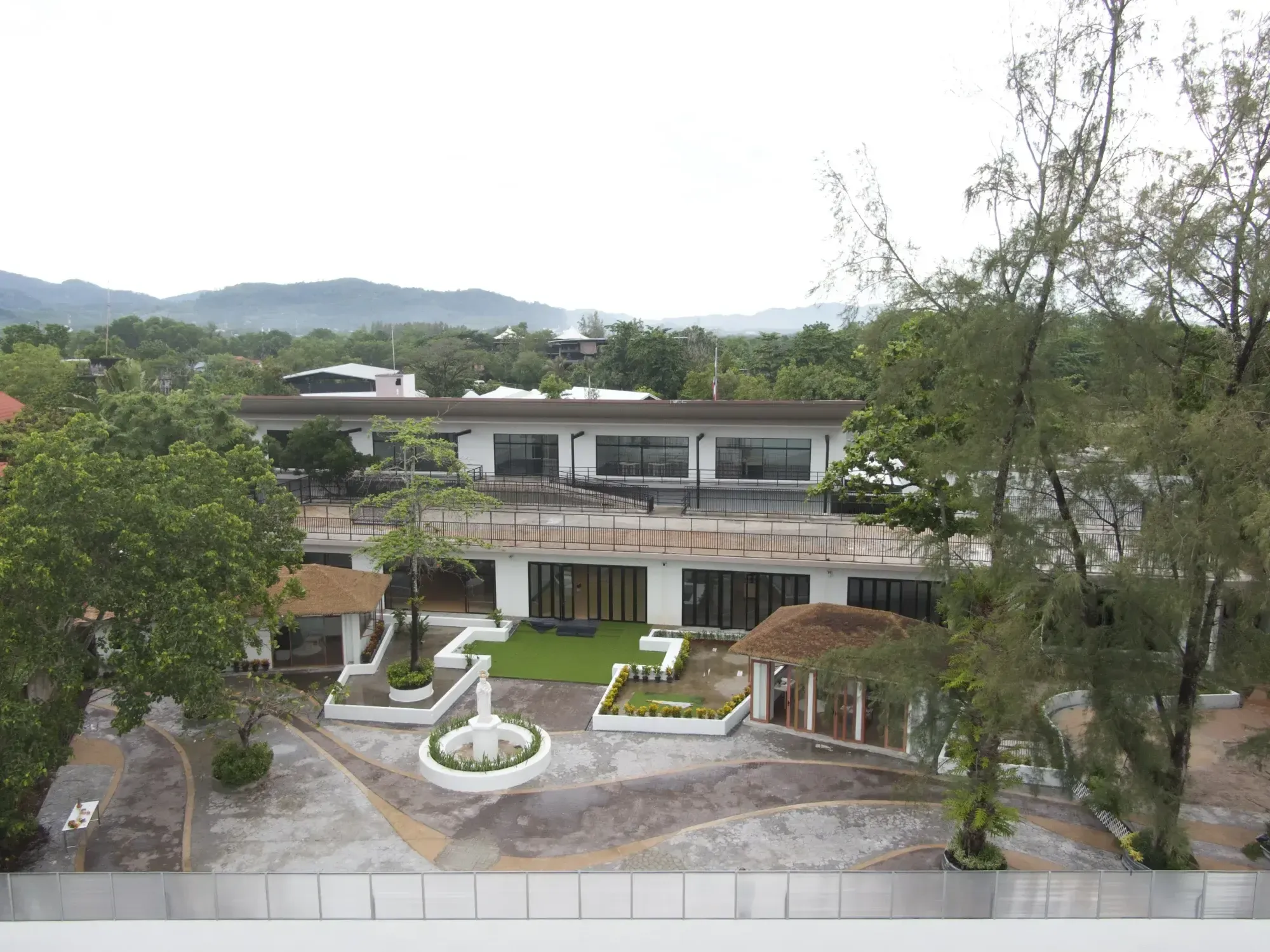
The newest campus of the well-established Ruamrudee International School group, whose flagship Bangkok campus has offered the American curriculum and IB Diploma since 1957. RIS Phuket launched focused on playgroups and early years, with a Reggio-inspired, nature-based approach on a seaside site, and is expected to expand year on year toward a fuller pre-K–12 offering. Worth watching closely if you have younger children and want the reassurance of an established Thai school group backing a newer Phuket campus. check current year-group availability directly, since it's still building out.
North London Collegiate School (NLCS) Phuket: Cherng Talay (opening 2028)
Announced in May 2026, NLCS Phuket is a significant one for the pipeline rather than an option for this school year: the campus, planned for Cherng Talay, is scheduled to open in the third quarter of 2028. NLCS is one of the UK's most highly regarded independent schools (rated Independent Secondary School of the Year in the Sunday Times Parent Power Guide 2026) and already runs sister campuses in Dubai, Singapore, Jeju, Kobe and Hong Kong. The Phuket campus will be a co-educational day and boarding school from Early Years to Year 13, with capacity for around 1,000 students rising to 1,500, and full boarding provision; notable for families who might otherwise have sent children overseas for a British boarding-style education. If your relocation timeline stretches out a couple of years, it's one to keep an eye on via nlcs-phuket.com, but not a near-term option.
A word on the newer names above: Glenalmond, RIS Phuket and CAIS are newly opened, still expanding year group by year group, or not yet fully licensed. That's not a reason to rule them out; several come from genuinely well-established school groups, and being an early family at a new campus has real upsides, including smaller classes and closer relationships with leadership. It does mean doing a bit more homework than you would for a 20-year-established school: confirm current licensing and accreditation status directly, ask how many year groups are actually open versus planned, and talk to any parents already enrolled if you can find them through local Facebook groups.
Early years and Montessori options
For toddlers and pre-schoolers, Montessori- and Waldorf-style nurseries and kindergartens (from roughly 150,000 THB a year) are dotted across the island and are a practical, lower-pressure way to start before transitioning into a mainstream international curriculum around age five or six.
Fees: what's really included
The advertised tuition figure is rarely the full picture. Budget for the following on top:
- Application & enrolment: One-off registration and application fees, typically 5,000–50,000 THB.
- Refundable capital levy or bond: Often 100,000–300,000 THB, theoretically returned when your child leaves the school.
- School bus: 50,000–90,000 THB a year, covering routes across the main expat areas.
- Materials & uniforms: 10,000–20,000 THB a year for books and materials, plus uniforms.
- Discounts: Most schools offer 10–25% sibling discounts and 5–10% discounts for paying the full year upfront.
All told, budget an extra £1,000–£3,000 (or the equivalent) per child per year on top of headline tuition. And always confirm current fees directly with the school's admissions office, since rates are reviewed annually.
Matching a school to a neighbourhood
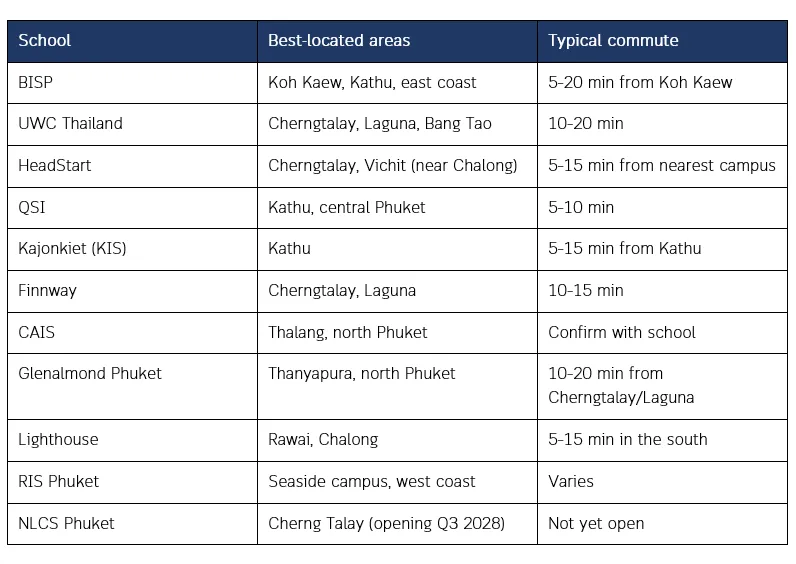
Most schools run their own bus network, so you don't strictly need to live on the doorstep — but shorter commutes make a real difference to family life once you factor in Phuket's traffic and heat.
Applying: the practical steps
- Enquire and tour. Contact the school, request a tour, and be upfront about your child's current year level and any learning support needs.
- Prepare documents. Passport copies, two years of previous school reports, birth certificate, and any learning support assessments.
- Entrance assessment. Most schools require an academic and English-language assessment, especially from Year 3 upward.
- Apply early. For BISP and UWC in particular, apply 6–12 months ahead of your target start date; waitlists for early years and key transition years (Reception, Year 7) can be long.
- Sort visa status. If arriving on a Non-Immigrant O visa (common for parents accompanying working spouses or on retirement/LTR visas), your child is generally covered under your visa. On a tourist visa, the school can usually help arrange the appropriate Non-Immigrant O or ED visa. No work permit is required for the child.
- Consider timing. Mid-year entry (around February–March) is often more available than the September intake; worth asking about if your relocation date doesn't align with the academic year.
A few honest tips from the parent community
- Visit in person before committing. Photos and prospectuses rarely convey the actual feel of a campus or its community.
- Ask what proportion of teachers are native English speakers, and request recent university placement statistics if your child is older.
- Check accreditation status (CIS, IB, Cambridge, WASC). It affects how easily your child's qualifications transfer if you move again.
- Join the Ladies Kicking Goals network and Phuket expat parent Facebook groups early. Honest, current comparisons from parents already on the ground are worth more than any brochure.
- If you're not sure yet how long you'll stay, ask each school about its withdrawal notice period and whether any part of the bond is refundable.
Fees, waitlists and intake dates change every academic year. Always confirm current details directly with each school's admissions team before making your final decision.